
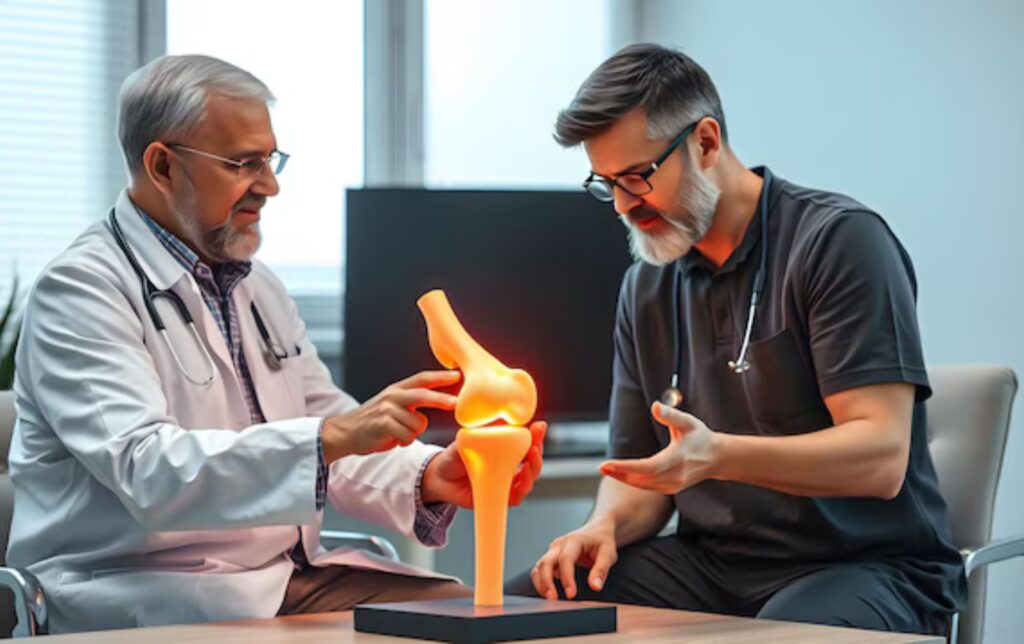
Getting treatment for joint pain should bring relief. For many people, though, it brings something else entirely: the frustrating realization that the pain is still there. If that sounds familiar, you’re not the only one going through it.
So many people live with persistent joint pain that simply doesn’t respond, no matter how consistent they’ve been. The truth is, joint pain not improving after treatment usually means the root cause hasn’t been properly addressed. Standard care focuses heavily on symptom relief rather than tissue repair, and that’s exactly where most people get stuck.
At Premier Wellness Florida, our Joint & Orthopedic Regeneration services are built for patients in this situation. Whether it’s chronic knee pain that won’t let up or full-body stiffness disrupting your daily life, here’s why this happens and what can genuinely help.
Pain Goes Quiet, But the Damage Doesn’t Always Go With It
Most treatments manage how pain feels, not what’s actually causing it. That’s why treatment failure in joint pain is so common. Here’s what’s really happening inside the joint:
- Damaged cartilage doesn’t rebuild itself. Medication quiets the signal, but the structural damage remains.
- Inflammation in the joints keeps cycling. Once the drug wears off, inflammation returns because the tissue causing it was never repaired.
- Tendons and ligaments have poor blood supply. Without targeted support, they simply don’t receive what they need to heal.
- Pain is a symptom, not the problem. Masking it delays the repair your body is asking for.
When Arthritis Pain Just Won’t Quit
Arthritis behaves differently from an injury. There’s no natural healing timeline. The joint tissue is actively breaking down, which is why arthritis pain not improving is so common even among people following their treatment plans closely.
- Arthritis is progressive. Without regenerative support, joint deterioration continues quietly in the background.
- Medications treat symptoms, not the source. Swelling and pain ease temporarily, but the joint keeps wearing down.
- Long-term joint stiffness becomes the new normal. Morning stiffness, locking after sitting, limited range of motion. These signal that long-term joint stiffness has taken hold.
- Many people accept it as aging. This assumption delays treatment and leads to preventable levels of pain and lost mobility.
Why Pain After Physiotherapy Doesn’t Always Mean It Failed
Physiotherapy builds strength, restores movement, and is genuinely useful. But when pain after the physiotherapy continues, it usually means structural damage inside the joint was never resolved.
- Physio works around the joint, not inside it. Stronger surrounding muscles help, but they can’t regenerate cartilage or repair torn ligaments.
- Inflammation in joints persists regardless of muscle strength. The source of inflammation is damaged tissue, not weakness. Building strength outside doesn’t stop the signal inside.
- The body’s healing slows with age. What resolved with physio at 30 may need deeper regenerative support at 50 or beyond.
What Most Treatments Get Wrong: A Side-by-Side Look
Standard care follows a predictable path, and for chronic knee pain especially, it often misses the tissue damage driving the problem. Here’s how common approaches compare to Regenerative Joint Therapy:
| Treatment Type | What It Does | Why It May Not Be Enough |
| Pain Medication | Reduces how much you feel the pain | Doesn’t repair cartilage or tissue damage |
| Anti-Inflammatory Drugs | Calms joint inflammation during flare-ups | Inflammation returns when tissue damage is still present |
| Physiotherapy | Builds muscle strength and improves movement | Does not regenerate ligaments, tendons, or cartilage |
| Cortisone Injections | Provides short-term relief from joint swelling | Temporary fix; repeated use can worsen joint health |
| Regenerative Joint Therapy | Supports tissue repair at the source using your body’s own biology | Targets the root cause, not just the symptoms |
How Regenerative Therapy Addresses What Others Miss
Regenerative medicine takes advantage of the body’s inherent capability for self-healing. For those people experiencing persistent joint pain who do not respond well to conventional forms of healing, it is time to put things into action.
- Stem Cell Therapy provides your joints with regenerative cells, starting the process of tissue restoration from within. The procedure proves effective, especially in treating severe joint injuries and restoring the condition of cartilage and ligaments. Our stem cell treatment protocol has proved highly effective in helping numerous clients struggling with their joint problems after other conservative treatment methods failed to help them.
- PRP Therapy utilizes growth factors extracted from your blood and applies them to your injured joint to reduce inflammation and repair your damaged soft tissues. Our PRP treatment represents a natural approach to relieving the inflammation and stiffness of your joints.
- Every plan is personalized. Your history, lifestyle, and what hasn’t worked before all shape the approach we recommend.
Frequently Asked Questions
Why is my joint pain still there even though I finished my treatment?
Most treatments reduce pain without repairing the tissue causing it. If cartilage or ligaments are still damaged, persistent joint pain will keep returning no matter how many treatment rounds you complete.
Can inflammation in joints keep coming back even with medication?
Yes, because medication calms the flare-up but doesn’t fix the tissue damage triggering it. As long as that damage exists, inflammation in joints will cycle back once the medication wears off.
Is regenerative joint therapy a good option if surgery has been suggested?
Many of our clients at Premier Wellness Florida avoided surgery entirely through Regenerative joint treatment using Stem Cell or PRP Therapy. A consultation with us will tell you whether your joints are good candidates for this path.
How long does it take to see results from regenerative joint treatment?
Some clients notice early improvements within a few weeks, while deeper chronic knee pain cases build results gradually over three to six months as tissue continues to repair from within.
Your Joints Deserve More Than Just Pain Management
Living with joint pain that is not improving is draining. It affects your sleep, your movement, and your confidence in your body. But it doesn’t have to stay that way.
Our Joint & Orthopedic Regeneration treatments such as Stem Cell Therapy and PRP Therapy at Premier Wellness Florida have been designed specifically to tackle the problem areas that other medical treatments can’t.
Are you looking for a solution that really makes a difference? Get in touch today and we will help put a plan into action.