
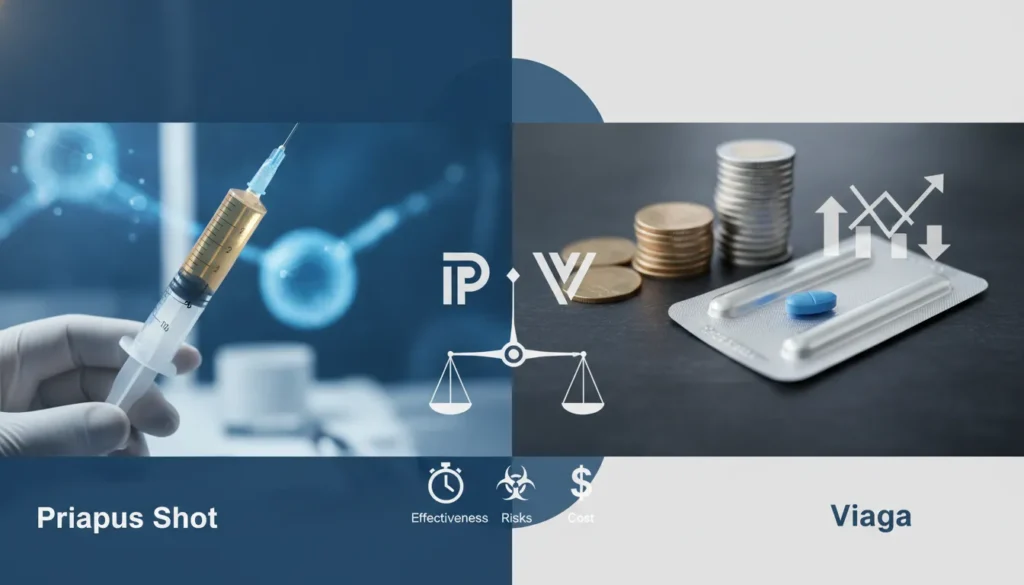
The right ED treatment depends on your health, not just on a treatment’s marketing claims. A comparison of Priapus Shot vs Viagra should include how quickly each option may work, how long effects may last, what the research shows, and what risks to consider. Viagra provides temporary support for erections after sexual stimulation. The P-Shot involves a blood draw, PRP preparation, penile injections, and follow-up care, with results that may take weeks to appear, if they occur. Neither treatment guarantees improved erections. A qualified provider can help you set realistic goals and compare medication, PRP, devices, counseling, and other options.
Key Takeaways
- Sildenafil is the more established option: Viagra is FDA-approved for erectile dysfunction, supported by extensive research, and typically works within 30 to 60 minutes when taken as prescribed.
- PRP treatment requires realistic expectations: The P-Shot may help some patients, but evidence remains limited, treatment methods vary, and improvements are not guaranteed or immediate.
- Get evaluated before choosing a treatment: Discuss your symptoms, medications, heart health, goals, risks, costs, and alternatives with a qualified sexual-health provider.
What Is the Priapus Shot (P-Shot), and How Does It Work?
The Priapus Shot, commonly called the P-Shot, is a procedure that uses platelet-rich plasma, or PRP, made from your own blood. A provider injects the concentrated plasma into selected areas of the penis. The proposed goal is to support tissue repair and circulation, which may help some aspects of erectile function.
The P-Shot is different from an FDA-approved medication for erectile dysfunction, and current research has not established how well it works or how long results may last. If you are considering the procedure, discuss your symptoms, medical history, medications, and expectations with a qualified provider. A sexual-health consultation at Premier Wellness Florida can help you compare treatment options based on your needs.
Uses PRP from your blood
PRP begins with a small blood sample, usually drawn from your arm. The sample goes into a centrifuge, which separates and concentrates the platelets from other blood components. Platelets contain proteins and growth factors involved in the body’s repair processes. The resulting PRP is then prepared for injection.
Because the material comes from your own blood, it generally presents less risk of an allergic reaction than a substance from another person. However, the procedure still carries risks. Your overall health, platelet levels, medications, and the clinic’s preparation method may all affect the treatment.
PRP is also used in some joint and soft-tissue procedures. You can learn more about PRP therapy before deciding whether penile PRP is appropriate for you.
What happens during the appointment
A P-Shot appointment usually starts with a health review and a conversation about your goals. Your provider may ask about erections, ejaculation, sensation, cardiovascular health, diabetes, hormone levels, medications, and previous treatments. These details can help identify factors contributing to erectile dysfunction.
During the procedure, the provider draws blood from your arm and processes it in a centrifuge. After preparing the injection area, the provider may use a local anesthetic or another numbing method. The concentrated PRP is then injected into selected areas of the penis.
The exact process varies between clinics. As the Cleveland Clinic explains, differences may include the amount of blood collected, platelet concentration, injection sites, and number of recommended sessions. Ask your provider to explain each step before treatment.
How PRP may affect penile tissue and blood flow
The proposed purpose of penile PRP is to deliver growth factors to tissue involved in erections and sensation. Some providers suggest these substances may support tissue repair, new blood-vessel growth, and local circulation. Since erections depend on healthy blood vessels, nerves, and penile tissue, these effects could theoretically support erectile function.
That proposed mechanism does not prove the treatment will work for every patient. Erectile dysfunction can relate to atherosclerosis, high blood pressure, diabetes, low testosterone, medication side effects, nerve conditions, anxiety, or relationship stress. PRP cannot address every possible cause.
It is also important to distinguish a biological theory from a proven patient outcome. Some people report improvements after treatment, but testimonials cannot show how the P-Shot compares with established therapies. Your provider should explain what the procedure may address and how you will measure progress.
FDA status, protocol differences, and evidence gaps
Penile PRP does not have the same FDA-approved indication or clinical evidence as prescription medications such as sildenafil or tadalafil for erectile dysfunction. The FDA has not approved PRP injections as a standard treatment for ED. A clinic may offer the procedure based on a provider’s medical judgment, but that does not mean it has undergone the same review process as an approved medication.
Research on penile PRP remains limited. Studies often involve small groups of participants and use different preparation methods, injection techniques, treatment schedules, and follow-up periods. Some report improvements in erectile-function scores, while others leave questions about how meaningful or long-lasting those changes may be.
Ask which PRP system your provider uses, how the sample is processed, how many injections are planned, and what evidence supports that protocol. You can also ask whether the clinic measures results with a validated questionnaire instead of relying only on testimonials. The Cleveland Clinic’s P-Shot overview provides additional context about the treatment and its evidence limitations.
What the P-Shot cannot promise
The P-Shot cannot promise a stronger erection, increased penis size, improved sensation, or a permanent solution for erectile dysfunction. There is not enough high-quality evidence to guarantee these outcomes. The treatment may not work, and any improvement can vary in timing, degree, and duration.
The procedure also does not automatically treat conditions contributing to ED. Diabetes, cardiovascular disease, low testosterone, medication use, nerve problems, and anxiety may require separate care. Your provider may recommend lab testing, a medication review, cardiovascular screening, or counseling before or alongside injection-based treatment.
Short-term effects may include soreness, swelling, bruising, and mild bleeding at the injection sites. Infection and other injection-related complications are also possible. The Cleveland Clinic notes that patients should weigh uncertain benefits against the cost and potential risks. A thorough consultation can help you determine whether the P-Shot fits your goals or whether another ED treatment has stronger supporting evidence.
How Does Viagra (Sildenafil) Treat Erectile Dysfunction?
Viagra is the brand name for sildenafil, a prescription medication for erectile dysfunction (ED). It does not create an automatic erection or increase sexual desire. Instead, it supports the body’s normal erection process by helping blood flow into the penis during sexual arousal.
Sildenafil belongs to a group of medications called PDE5 inhibitors. It is a common oral treatment for ED, but it is not suitable for everyone. A provider should review your health history, cardiovascular health, and current medications before prescribing it. The FDA prescribing information for Viagra explains approved uses, dosing instructions, and important safety warnings.
How PDE5 inhibitors improve blood flow
An erection begins when sexual stimulation causes the release of nitric oxide in penile tissue. Nitric oxide helps create a chemical messenger called cyclic guanosine monophosphate, or cGMP. This messenger relaxes smooth muscle in the penis, allowing blood vessels to widen and blood to flow into erectile tissue.
An enzyme called PDE5 breaks down cGMP. Sildenafil blocks PDE5, which allows cGMP to remain active for longer. This helps blood vessels stay relaxed during sexual stimulation, making it easier to achieve and maintain an erection. Sildenafil supports the physical process of an erection, but it is not an aphrodisiac and does not increase sexual desire.
Why sexual stimulation remains necessary
Sildenafil does not cause an erection without arousal. Sexual stimulation is still needed to start the nitric oxide and cGMP process that sildenafil supports. Without sexual stimulation, the medication may have little or no noticeable effect.
This distinction can help you set realistic expectations. Sildenafil may improve erection firmness and reliability, but it does not automatically address low libido, premature ejaculation, relationship concerns, or emotional factors. Stress, anxiety, low testosterone, medication side effects, diabetes, and vascular conditions can also affect sexual function. A personalized sexual health evaluation can help identify possible contributors and guide treatment choices.
Onset, duration, and proper use
Sildenafil often begins working within 30 to 60 minutes. Its effects may remain useful for about four hours, although the timing and response vary. This does not mean an erection should last four hours. It describes the period when sildenafil may help support an erection after sexual stimulation.
Take sildenafil exactly as prescribed, and do not take more than one dose in a 24-hour period unless your provider gives you different instructions. Many people take it about an hour before sexual activity. Taking it with water on an empty stomach may help it work more predictably, but always follow your prescription directions.
If sildenafil does not work the first time, do not take an extra dose without medical guidance. The dose, timing, food intake, other medications, and underlying health conditions can all affect the response.
How meals, alcohol, and other factors affect results
A heavy or high-fat meal can delay sildenafil’s absorption, which may make the medication take longer to work. Alcohol may also interfere with sexual performance by affecting blood pressure, arousal, and erection quality. Limiting alcohol can make it easier to understand how sildenafil affects you and may support a more consistent response.
Anxiety, poor sleep, uncontrolled diabetes, cardiovascular disease, and certain medications can also influence results. Ask a provider or pharmacist about grapefruit and grapefruit juice if you take other medications, since grapefruit can affect how some drugs are processed.
Never combine sildenafil with nitrate medications, such as nitroglycerin, because the combination can cause a dangerous drop in blood pressure. Sildenafil should also not be used with riociguat. Share a complete list of medications and supplements with your provider before starting treatment.
Brand-name Viagra, generic sildenafil, and FDA-approved use
Viagra contains sildenafil citrate, and generic sildenafil contains the same active ingredient. When it comes from an approved manufacturer and is used as prescribed, generic sildenafil is expected to provide the same therapeutic effect as brand-name Viagra, often at a lower price. The FDA explains how generic drugs are evaluated, including standards for quality, strength, and performance.
The FDA has approved sildenafil for the treatment of ED. Sildenafil is also available in other formulations and strengths for certain medical conditions, so use only the product and dose prescribed for you. Avoid unverified online products that may contain undisclosed ingredients or inaccurate doses.
A qualified provider can determine whether sildenafil is appropriate for your health needs and discuss alternatives if it is not. Premier Wellness Florida offers personalized sexual health services for adults seeking confidential support with ED and related concerns.
Priapus Shot vs. Viagra: Timing, Duration, and Experience
Viagra and the Priapus Shot follow very different treatment schedules. Sildenafil, the active ingredient in Viagra, is taken before anticipated sexual activity and may begin working within 30 to 60 minutes. The P-Shot uses platelet-rich plasma, or PRP, made from a sample of your blood. It requires an office visit and may take days or weeks before you notice any changes, if it helps at all.
The duration can also vary significantly. Viagra provides temporary support after each dose, while P-Shot results are sometimes reported to last for months. However, the evidence for the P-Shot remains limited, and no large clinical trial has directly compared it with Viagra. A provider can help you consider timing, convenience, safety, cost, and personal goals during a sexual health evaluation.
Viagra’s 30-to-60-minute onset and four-hour activity window
Sildenafil is usually taken about 30 to 60 minutes before sexual activity. It does not cause an automatic erection. Sexual stimulation is still necessary, and your response may depend on factors such as your health, dosage, stress level, and other medications.
The medication may remain active for about four hours, but this does not mean you will have a continuous erection during that time. Instead, it may help you achieve and maintain an erection when you are sexually aroused. A large or high-fat meal can delay absorption, while alcohol may make it more difficult to achieve or maintain an erection.
Sildenafil is an on-demand medication, so you generally take it only when prescribed and as directed. The FDA prescribing information for Viagra outlines dosing instructions, contraindications, and possible side effects. Do not take extra medication to make it work faster or produce a stronger response.
P-Shot recovery and uncertain time to results
The P-Shot begins with a blood draw. A provider processes the sample to concentrate the platelets, then injects the PRP into selected areas of the penis. The appointment may be relatively short, but you may experience temporary soreness, swelling, bruising, or tenderness afterward.
There is no standardized recovery schedule or guaranteed timeline for results. Some providers describe minimal downtime, while others may recommend avoiding sex, strenuous exercise, or pressure on the treated area for a short period. Follow the instructions from your clinician, and report worsening pain, spreading redness, drainage, fever, or substantial swelling.
The P-Shot is not intended to work within an hour. If changes occur, they may take several weeks to appear. Some treatment plans also involve multiple injections over several months. Reported benefits may last 12 to 18 months, but these estimates are not established guarantees. A review of P-Shot evidence notes limitations such as small studies, inconsistent protocols, and a lack of large randomized trials.
On-demand medication versus repeat injections
Viagra offers a straightforward short-term approach. You take the prescribed dose before sex, allow time for it to work, and use it again only as directed. This may appeal to people who want flexibility without scheduling a procedure. It also lets you evaluate the response each time you use the medication.
The P-Shot involves a different commitment. You schedule an appointment for the blood draw, PRP preparation, and injections. Depending on the provider’s protocol and your response, one treatment plan may include repeat injections and follow-up visits. Those appointments require additional time and may increase the overall cost.
Convenience should not be the only deciding factor. Viagra may be unsafe with nitrates and certain other medications, and an injection procedure may not suit every patient. Your provider should review your medical history, prescriptions, cardiovascular health, bleeding risk, and treatment expectations before recommending either option.
Set goals for erections and sexual satisfaction
Start by identifying what you want to improve. Are you having trouble getting an erection, keeping one, or achieving enough firmness for penetration? Do erections fade during sex? Is reduced confidence or anxiety affecting your experience? Specific answers can help your provider distinguish erectile dysfunction from other sexual-health concerns.
Your preferences matter, too. Consider how often you have sex, whether you want an on-demand treatment, and how you feel about tablets or injections. Some people prefer a medication with a known short-term effect. Others may ask about longer-lasting options, even though P-Shot results are less predictable and its effectiveness has not been firmly established.
Erectile dysfunction may be associated with diabetes, high blood pressure, low testosterone, medication side effects, sleep disorders, anxiety, or cardiovascular disease. Addressing these factors may improve sexual function and support your overall health. Premier Wellness Florida provides personalized wellness services that can support a broader conversation about preventive care and sexual health.
Why testimonials cannot prove long-term results
A personal success story can explain how someone felt after a P-Shot, but it cannot predict your outcome. Testimonials usually do not include a comparison group, consistent measurements, or enough follow-up to show whether an improvement lasted. People who did not benefit may also be less likely to share their experience.
P-Shot protocols can vary by clinic. Providers may use different amounts of PRP, injection sites, treatment intervals, and follow-up methods. This makes it difficult to compare one testimonial with another. An improvement may also relate to changes in medication, exercise, stress, relationships, or psychological well-being rather than the injection alone.
Viagra has more extensive clinical research, but it is not appropriate or effective for everyone. A balanced decision should consider the quality of the evidence, expected timing, risks, treatment burden, and your medical history. Ask how success will be measured, when follow-up will occur, and what alternatives are available if the first treatment does not meet your goals.
Which Is More Effective: Priapus Shot or Viagra?
There is no single erectile dysfunction treatment that works best for every person. Viagra, the brand name for sildenafil, is an FDA-approved medication supported by decades of research, standardized dosing, and extensive safety data. The Priapus Shot, or P-Shot, uses platelet-rich plasma, commonly called PRP, prepared from a patient’s blood. Early research suggests PRP may help some men, but it has not undergone the same level of testing as sildenafil.
The main difference is the strength and consistency of the evidence. Sildenafil has been evaluated in large randomized clinical trials involving thousands of patients. Researchers have also established how it works, when to take it, common side effects, and situations in which it should not be used. P-Shot protocols vary between clinics, and researchers are still studying which patients may benefit, how long results may last, and how PRP compares with established treatments.
Your health history also matters. Erectile dysfunction may relate to cardiovascular disease, diabetes, medication side effects, hormone changes, nerve problems, stress, or several factors at once. A medical evaluation can help identify the cause and guide a safer treatment decision.
Sildenafil response rates, erectile-function scores, and clinical trials
Clinical research suggests that sildenafil helps roughly 70% to 85% of appropriately selected patients achieve better erections. Researchers have assessed its effectiveness through numerous randomized controlled trials involving thousands of participants. Many of these studies use the International Index of Erectile Function, or IIEF, to measure erectile function and sexual satisfaction.
Sildenafil does not permanently change penile tissue. It temporarily supports blood flow when sexual stimulation is present, which makes it useful for people seeking an on-demand treatment with a predictable activity period. However, response rates are not guarantees. The medication may work less effectively when erectile dysfunction involves severe vascular disease, nerve damage, uncontrolled diabetes, medication effects, or low sexual interest.
A person who does not respond initially may need a review of timing, dose, sexual stimulation, alcohol use, meals, or other medications. Only a qualified clinician should recommend dosage changes. The FDA prescribing information for Viagra explains approved use, dosing, warnings, and safety considerations.
Guideline support for PDE5 inhibitors
Sildenafil belongs to a medication class called phosphodiesterase type 5 inhibitors, or PDE5 inhibitors. Other medications in this class include tadalafil, vardenafil, and avanafil. Clinicians often discuss these treatments with patients because their benefits, side effects, contraindications, and dosing instructions have been studied extensively.
The American Urological Association erectile dysfunction guideline-guideline) recommends discussing FDA-approved oral PDE5 inhibitors with men seeking treatment, unless a medical reason makes them unsafe. The guideline also supports shared decision-making and evaluation for health conditions that may contribute to erectile dysfunction.
Guideline support does not mean sildenafil is appropriate for everyone. People who take nitrate medications for chest pain should not use sildenafil, since the combination can cause a dangerous drop in blood pressure. Riociguat should not be combined with PDE5 inhibitors either. Anyone taking alpha-blockers, blood pressure medications, or several prescriptions should ask a clinician or pharmacist about possible interactions before using sildenafil.
PRP studies, small samples, and short follow-ups
Research on PRP for erectile dysfunction is still developing. Some small studies suggest that 60% to 75% of participants reported better erections after treatment. However, many of these studies included fewer than 50 patients, used different PRP preparation methods, or followed participants for only a short period.
Small studies can offer useful early information, but they cannot show how consistently a treatment works across a larger population. Results may also be influenced by placebo response, differences in patient health, inconsistent outcome measures, or the lack of a comparison group. Someone may report improvement after an injection without the treatment being the only reason for that change.
A review of the available evidence in Doctronic’s discussion of P-Shot research highlights these limitations. This does not establish that PRP has no potential value. It means patients should examine reported success rates carefully and ask how a clinic measures improvement, how long it follows patients, and what options are available if the first treatment does not meet expectations.
What systematic reviews show about PRP
A 2025 systematic review and meta-analysis examined seven randomized controlled trials involving 660 patients. The review reported that IIEF scores improved more at 12 and 24 weeks among participants who received PRP than among control groups. These findings suggest that PRP may have potential for treating erectile dysfunction.
Systematic reviews can provide a broader view by combining results from several studies. Their conclusions still depend on the quality and consistency of the research they include. PRP studies can be difficult to compare when they use different injection schedules, platelet concentrations, preparation systems, patient selection criteria, and control treatments.
The findings support continued research, but they do not guarantee that the P-Shot will work for every patient. They also do not establish that PRP is more effective than sildenafil. Anyone considering PRP should ask the provider to explain the research, expected timeline, treatment limitations, and follow-up plan. A consultation may also include other options available through Premier Wellness Florida’s sexual wellness and regenerative medicine services.
Why P-Shot protocols vary by clinic and study
Unlike sildenafil, which comes in standardized tablet strengths with established prescribing information, P-Shot treatment can differ considerably between clinics. Providers may use different blood collection methods, centrifuge systems, platelet concentrations, injection volumes, injection sites, and numbers of treatment sessions. Some clinics combine PRP with other therapies, making it more difficult to determine which treatment contributed to a reported result.
Provider training and patient selection may also affect outcomes. Erectile dysfunction can result from vascular disease, nerve injury, diabetes, medication effects, hormone changes, anxiety, relationship concerns, or multiple factors together. A PRP injection may not address every possible cause.
Before choosing a P-Shot, ask how the clinic prepares the PRP, who performs the injection, what research supports the protocol, and how improvement will be measured. You should also ask about recovery, possible retreatment, total cost, and alternatives. A qualified provider should explain potential benefits without presenting uncertain outcomes as guaranteed results.
No direct trials compare the P-Shot with Viagra
Current evidence does not provide a reliable head-to-head answer showing that the P-Shot is more effective than Viagra. Large randomized trials have not definitively compared one standardized PRP protocol with sildenafil while measuring the same outcomes over the same period.
This distinction matters. Research showing that PRP improves IIEF scores compared with a control group does not prove that PRP works better than sildenafil. Likewise, sildenafil’s established response rates do not show whether PRP might be useful for a specific patient who cannot tolerate medication or prefers an injection-based approach.
For now, sildenafil has the stronger evidence base and clearer guideline support. PRP remains an option some patients may wish to discuss, but its potential benefits, duration, and ideal protocol require further study. A qualified provider can compare both options based on your health history, medication safety, treatment goals, convenience, cost, and other erectile dysfunction therapies.
Priapus Shot vs. Viagra: Risks and Safety
The P-Shot and Viagra have different safety considerations because they work in different ways. The P-Shot involves drawing a small amount of your blood, processing it into platelet-rich plasma (PRP), and injecting it into penile tissue. Viagra, or sildenafil, is an oral medication that affects blood flow throughout the body.
Neither option is right for everyone. Your medical history, current medications, cardiovascular health, and treatment goals should guide the decision. A qualified provider can explain the potential benefits, risks, alternatives, and follow-up requirements. You can learn more about sexual health services at Premier Wellness Florida before scheduling a consultation.
P-Shot bruising, swelling, soreness, and bleeding
Because the P-Shot uses injections, some people experience temporary bruising, swelling, soreness, skin discoloration, or minor bleeding around the injection sites. You may also feel pressure or discomfort during the appointment or while the area heals. These effects can vary depending on your injection technique, individual healing, and the amount of tissue treated.
Ask your provider which symptoms are expected and how long they should last. The Cleveland Clinic’s P-Shot overview explains that patients should understand these possible effects, along with infection and other injection-related complications, before treatment.
Follow all aftercare instructions, including guidance about sexual activity, exercise, cleaning the area, and medications that may affect bleeding. Increasing pain, swelling, or discoloration should not automatically be dismissed as a normal part of recovery.
Infection and other injection risks
Any injection can introduce bacteria beneath the skin, even when a clinic follows careful sterilization procedures. An infection may cause increasing redness, warmth, swelling, drainage, fever, or worsening pain. Persistent numbness or pain also deserves medical attention instead of watchful waiting.
Contact your provider promptly if the treated area looks increasingly inflamed or your symptoms are getting worse rather than better. The Cleveland Clinic recommends medical care for signs of infection, worsening or lasting pain, or numbness that continues for more than a few hours.
Before treatment, ask about sterile technique, the clinician’s training, PRP preparation, and the plan for handling complications. Make sure you know whom to call after the appointment and where to seek care outside office hours.
PRP safety concerns and inconsistent protocols
PRP comes from your own blood, but that does not guarantee a predictable result. Clinics may use different collection tubes, centrifugation methods, platelet concentrations, injection sites, and treatment schedules. These differences make it difficult to compare one clinic’s results with another’s or predict how you will respond.
Evidence for PRP in erectile dysfunction also remains limited. Large, well-designed randomized trials have not established consistent effectiveness, and the American Urological Association has not endorsed PRP injections for ED because the available evidence is insufficient. Ask whether your provider can explain the research, expected benefits, alternatives, and possibility of no improvement.
A responsible consultation should not promise a guaranteed change in erection quality, size, sensation, or sexual performance. Consider the P-Shot only after you understand its uncertain results and how it compares with established treatments.
Viagra side effects, including headache, flushing, congestion, and indigestion
Viagra and generic sildenafil can cause side effects because they widen blood vessels. Common effects include headache, facial flushing, nasal congestion, dizziness, and indigestion. Some people may also notice visual changes, such as a temporary color cast or increased sensitivity to light.
Taking more than prescribed does not necessarily improve results and may increase the chance of side effects. Tell your provider about heart conditions, blood pressure concerns, liver or kidney problems, and every medication or supplement you take. The FDA prescribing information for Viagra includes detailed dosing, contraindication, and adverse-reaction information.
Alcohol may worsen dizziness and make it harder to achieve or maintain an erection. If side effects are persistent, severe, or unusual for you, stop taking the medication and contact your healthcare provider for guidance.
Priapism, vision changes, hearing changes, and chest symptoms
Rare but serious reactions require immediate attention. Priapism, an erection lasting longer than four hours, can damage penile tissue if it is not treated promptly. Sudden vision loss or sudden hearing loss also requires urgent medical evaluation, even if the change seems temporary.
Chest pain, fainting, severe shortness of breath, or a significant drop in blood pressure can signal a serious problem. Tell emergency clinicians when you last took sildenafil, especially if you are being evaluated for chest symptoms. The FDA Viagra label describes these uncommon but important risks.
Do not take another dose to correct a poor response. If sildenafil does not work as expected, discuss the dose, timing, underlying causes, and other treatment options with your provider.
Medication concerns involving nitrates, riociguat, and alpha-blockers
Sildenafil can cause a dangerous drop in blood pressure when combined with nitrate medications, including nitroglycerin and certain recreational drugs known as “poppers.” It should also not be used with riociguat, a medication prescribed for some forms of pulmonary hypertension. These combinations can be life-threatening.
Alpha-blockers, which may be prescribed for high blood pressure or urinary symptoms, can also lower blood pressure when taken with sildenafil. Your clinician may need to adjust the timing or dosage, or recommend another treatment. Share a complete medication list before receiving a prescription, including over-the-counter products and supplements.
The NHS guidance on sildenafil outlines conditions and medications that require caution. Never borrow tablets, use someone else’s prescription, or buy erectile dysfunction products from an unverified source.
Know when side effects require urgent care
Seek emergency care for an erection lasting more than four hours, sudden vision or hearing loss, chest pain, fainting, severe trouble breathing, or signs of a serious allergic reaction, such as facial swelling or difficulty breathing. These symptoms should not be monitored at home.
After a P-Shot, contact your provider about worsening pain, spreading redness, significant swelling, drainage, fever, or numbness that does not resolve. After taking Viagra, call your provider about side effects that persist, interfere with daily activities, or appear after a dose or medication change.
Before treatment, ask for written instructions covering expected symptoms, warning signs, after-hours contact information, and follow-up care. This information can help you compare the P-Shot and Viagra based on your health history, rather than relying only on convenience or testimonials.
What Do the Priapus Shot and Viagra Cost?
The cost of erectile dysfunction treatment depends on more than the price of one appointment or prescription. Consider how often you will need treatment, whether insurance contributes, and whether the option fits your health history and goals.
The Priapus Shot, also called the P-Shot, is generally a self-pay procedure. Viagra and generic sildenafil are prescription medications, so your out-of-pocket cost may depend on your insurance plan, pharmacy, dose, and prescription quantity. Comparing the estimated expense over several months can give you a more useful picture than comparing one injection with one tablet.
Prices also vary between providers and pharmacies. Before choosing a treatment, ask what the quoted price includes and whether follow-up visits, additional testing, or retreatment cost extra. A consultation with a qualified sexual-health provider can help you compare options safely. Premier Wellness Florida provides personalized sexual health services for adults in Cape Coral and nearby Southwest Florida communities.
P-Shot self-pay pricing and typical insurance exclusions
Most health insurance plans do not cover the P-Shot. Insurers may classify it as an elective or investigational procedure rather than a standard treatment for erectile dysfunction. The Cleveland Clinic reports that one P-Shot injection may cost more than $1,000, although the final price depends on the clinic, location, and services provided.
Some clinics recommend a series of injections instead of one treatment. If that applies to you, request the total package price before scheduling. Ask whether the fee includes the consultation, blood draw, PRP preparation, injection, aftercare instructions, and follow-up appointment.
You should also ask whether the clinic requires payment in full or offers financing. An advertised price may not include every part of the procedure, so an itemized estimate makes it easier to compare providers fairly.
Generic sildenafil, brand-name Viagra, prescriptions, and coverage
Generic sildenafil contains the same active ingredient as brand-name Viagra and typically costs less. Both require a prescription. Your out-of-pocket cost may depend on your insurance coverage, copay, pharmacy, prescribed dose, and the number of tablets.
Some insurance plans cover generic sildenafil but not brand-name Viagra. Others may limit the number of tablets covered each month or require prior authorization. If you pay cash, ask your prescriber or pharmacist whether a different pharmacy, prescription quantity, or discount program could reduce the cost.
A clinician may prescribe a limited quantity first to assess how you respond. If sildenafil is effective and safe for you, future refills may be easier to manage. Avoid buying ED medication from unverified websites, where the product may be counterfeit or contain an unsafe dose.
Oral ED medications have been studied extensively. Research summarized by Doctronic reports 70% to 85% success rates for sildenafil and tadalafil, although individual results vary. Your clinician can determine whether sildenafil is appropriate based on your medications, cardiovascular health, and other risk factors.
How provider fees, PRP preparation, location, and follow-up affect cost
P-Shot pricing may reflect the provider’s training, clinic location, equipment, and time spent on your care. The procedure typically involves drawing a small amount of blood, processing it to prepare platelet-rich plasma, and injecting the preparation. Clinics may use different equipment, preparation methods, platelet concentrations, and injection techniques, which makes direct price comparisons difficult.
Some providers include a medical evaluation and follow-up visit in the initial fee. Others charge separately for each service. Ask whether the quoted price includes blood collection, PRP preparation, the injection, supplies, follow-up, and care for expected effects such as bruising or soreness.
It is also reasonable to ask about the provider’s experience with PRP and sexual-health care. The Cleveland Clinic recommends comparing provider qualifications and treatment details instead of choosing a clinic based only on a promotional price.
Compare repeat injections, refills, and long-term expenses
The P-Shot and Viagra involve different spending patterns. A P-Shot may require a larger payment at the beginning, followed by no daily medication cost. However, some patients may need more than one injection or a later retreatment. The duration of any benefit is not guaranteed, and research does not establish one standard schedule for every patient.
Sildenafil usually costs less per treatment, but you pay for each prescription and refill. Your total expense depends on how often you use it, how many tablets your provider prescribes, and whether insurance covers the medication. Some people use sildenafil occasionally, while others take it more regularly.
When comparing options, estimate the cost over six or 12 months. For the P-Shot, include the initial procedure, possible repeat injections, follow-up visits, and travel. For sildenafil, include the consultation, prescription, refills, and pharmacy fees. Some reports suggest that P-Shot benefits may last 12 to 18 months after a treatment cycle, but that timeline is not guaranteed, as Lowcountry Male explains.
Ask about itemized pricing and retreatment
Before scheduling treatment, request a written estimate that lists every expected charge. Ask these questions:
- Does the price include the consultation and medical evaluation?
- Are blood collection and PRP preparation included?
- Does the fee cover one injection or a series?
- How many follow-up visits are included?
- What happens if the first treatment does not meet your goals?
- How much does retreatment cost?
- Are medication, supplies, or additional testing billed separately?
- What payment or financing options are available?
Ask how the clinic measures progress, too. A thoughtful provider should discuss your symptoms, health history, medications, and expectations rather than promise a specific result. If a clinic recommends several injections, ask what supports that schedule and how the provider will decide whether another treatment is appropriate.
A consultation with Premier Wellness Florida can help you review treatment options, expected costs, and health factors that may affect your sexual function.
Who Should Consider Viagra, a P-Shot, or Another ED Treatment?
The right erectile dysfunction treatment depends on more than how quickly you want results. Your symptoms, medical history, current medications, comfort with injections, treatment goals, and budget all matter. ED can have several causes at once, including reduced blood flow, diabetes, low testosterone, medication side effects, anxiety, depression, or relationship stress.
A medical evaluation is often the best starting point. A qualified provider can review your symptoms, check for contributing health conditions, and explain whether an oral medication, platelet-rich plasma (PRP) treatment, device, counseling, or another option fits your needs. The Cleveland Clinic’s guidance on the P-Shot also recommends speaking with a primary care doctor or urologist before pursuing the procedure.
Why Viagra suits many patients
Viagra, the brand name for sildenafil, may suit men who want a well-studied, on-demand treatment for ED. Oral PDE5 inhibitors have been evaluated in large clinical trials and help many patients achieve an erection when prescribed appropriately. Sildenafil usually starts working within 30 to 60 minutes and may remain active for about four hours. Sexual stimulation is still necessary, so it does not create an automatic erection.
A clinician may consider sildenafil when ED is related to reduced blood flow and there are no safety concerns involving the heart, blood pressure, or other medications. Generic sildenafil is usually less expensive than brand-name Viagra, making it a practical first option for many patients. It is not safe for everyone, however. Men who take nitrate medications, use riociguat, or have certain cardiovascular conditions need medical guidance before using it. The FDA prescribing information for Viagra outlines important contraindications and safety warnings.
When patients may consider PRP after medication concerns
Some men ask about the P-Shot after sildenafil or tadalafil has not provided the results they want. Others experience side effects, cannot take PDE5 inhibitors safely, or prefer to explore a procedure instead of taking medication before sexual activity. PRP treatment uses a small sample of the patient’s blood, which is processed to concentrate platelets before the preparation is injected into penile tissue.
Expectations should remain realistic. The P-Shot is not FDA-approved as a treatment for ED, and its research base is less established than Viagra’s. Studies have used different PRP preparation methods, injection techniques, and follow-up periods, so results may vary between providers. Before choosing PRP, ask how the injection is prepared, what evidence supports the clinic’s protocol, how many treatments may be recommended, and what happens if the treatment does not help.
Address cardiovascular, metabolic, hormonal, medication, and psychological factors
ED treatment should address factors that may be contributing to the problem. High blood pressure, high cholesterol, diabetes, obesity, poor sleep, and cardiovascular disease can affect blood flow and sexual function. Low testosterone or another hormonal imbalance may also play a role, although hormone therapy is not appropriate for every man with ED.
Your medication list deserves a careful review. Some antidepressants, blood pressure drugs, prostate medications, and other prescriptions may affect erections. Stress, depression, performance anxiety, and relationship difficulties can contribute as well. That does not mean symptoms are “only psychological.” Physical and emotional factors often overlap. Depending on your situation, care may include lab testing, medication changes, counseling, health coaching, or treatment for an underlying condition. Premier Wellness Florida provides personalized wellness services that may support a broader health evaluation.
Recognize ED as a possible sign of another health condition
ED may be an early sign of a health problem that has not yet been diagnosed. The blood vessels involved in erections are smaller than many of the body’s larger arteries, so changes in vascular health can sometimes appear as sexual symptoms before other signs become noticeable. Diabetes, heart disease, high blood pressure, hormonal changes, and nerve disorders can all affect erectile function.
Treating the erection alone may not address the full issue. Tell your provider when the problem began, whether it happens every time, whether you still have morning erections, and whether your sex drive has changed. The Cleveland Clinic explains the connection between ED and conditions such as cardiovascular disease, diabetes, and hormonal imbalances. This information can help guide appropriate testing and treatment.
Consider tadalafil, vacuum devices, alprostadil, counseling, and implants
Viagra is only one option. Tadalafil, sold under the brand name Cialis, may suit men who want a longer window of medication activity or more flexibility around sexual activity. A vacuum erection device uses gentle suction to draw blood into the penis. Alprostadil may be delivered by injection or another local method when oral medications are not effective or appropriate.
Counseling can help when anxiety, depression, trauma, or relationship concerns affect sexual function. For severe or persistent ED that does not respond to less invasive treatments, a penile implant may be an option. Each approach has different benefits, limitations, costs, and safety considerations. The American Urological Association’s ED guideline-guideline) supports shared decision-making, so ask your provider to explain how each option fits your health and goals.
Know when to seek a medical evaluation first
Schedule a medical evaluation before choosing a P-Shot, Viagra, or another ED treatment if symptoms are new, persistent, or worsening. You should also seek care if ED occurs with chest pain, shortness of breath, fainting, leg pain during activity, a major change in sex drive, or other unexplained symptoms. These signs may point to a condition that needs attention before sexual activity or ED medication is considered.
A clinician should review your heart health, blood pressure, medical history, medications, and treatment goals. Seek urgent care for an erection lasting more than four hours, sudden vision or hearing changes, or chest symptoms after taking an ED medication. Do not combine sildenafil with nitrates, recreational “poppers,” or unapproved sexual-enhancement products. A thorough evaluation gives you a safer basis for comparing medication, PRP, devices, counseling, and other treatments.
Choose an ED Treatment With a Qualified Provider
Choosing between a Priapus Shot and Viagra involves more than comparing an injection with a pill. Erectile dysfunction may be connected to cardiovascular disease, diabetes, hormone changes, medication side effects, stress, or relationship concerns. A qualified provider can review these factors and help you choose an option that fits your health history, comfort level, and goals.
During your appointment, expect a discussion about potential benefits, side effects, timing, cost, and other treatments. The Priapus Shot uses platelet-rich plasma (PRP) prepared from your blood, while Viagra, also called sildenafil, is an FDA-approved prescription medication for erectile dysfunction. These treatments differ in how they work, how quickly they may help, and how much clinical evidence supports them.
A careful evaluation may also identify health concerns that need attention. Erectile dysfunction can sometimes be an early sign of vascular or metabolic problems, even when other symptoms are not obvious. Premier Wellness Florida offers personalized sexual-health services for adults in Cape Coral and nearby Southwest Florida communities.
Review your symptoms, health history, medications, and goals
Start by explaining what has changed and when you first noticed it. Tell your provider whether you have trouble getting an erection, maintaining one, reaching orgasm, or feeling sexual desire. Mention whether the issue occurs every time or only in specific situations. These details can help distinguish erectile dysfunction from other sexual-health concerns.
Bring a complete list of prescription medications, over-the-counter products, and supplements. Your provider should also know about heart disease, high or low blood pressure, diabetes, low testosterone, previous pelvic surgery, and mental health conditions. Some people consider a P-Shot after oral medications have caused side effects or have not worked well, but PRP is not appropriate for every patient.
Be clear about your goals. You may want more reliable erections, fewer side effects, greater spontaneity, or an option that does not require taking medication before sex. The Cleveland Clinic’s P-Shot guidance recommends discussing your questions and alternatives with a qualified healthcare provider.
Ask about PRP preparation, provider training, and injection technique
If you are considering a P-Shot, ask how the clinic prepares the PRP and which treatment protocol the provider uses. The process generally involves drawing a small amount of blood, processing it to concentrate platelets, and injecting the preparation into selected areas. Platelets have a role in clotting and tissue repair, but PRP preparation and injection methods can differ between clinics.
Ask how often the provider performs the procedure, what relevant training they have completed, and how they reduce the risks of infection, bleeding, and discomfort. You can also ask which areas are injected, whether numbing medication is available, and what recovery may involve. A responsible provider should explain the process clearly and avoid promising a guaranteed result.
It is also worth asking how outcomes are measured. PRP studies have used different preparation methods, injection schedules, and patient groups, which makes results difficult to compare. The Cleveland Clinic’s overview of PRP and the P-Shot offers helpful background for preparing questions about the procedure and its limitations.
Set measurable goals and a follow-up plan
Before treatment, decide how you will measure improvement. Your goal might be achieving an erection firm enough for intercourse, maintaining an erection longer, reducing reliance on medication, or feeling more satisfied with your sex life. Your provider may use a validated questionnaire, such as the International Index of Erectile Function, along with your personal description of your symptoms and experience.
Ask when you might notice changes and how many appointments may be recommended. Viagra is usually taken as needed, while a P-Shot involves an injection, a recovery period, and follow-up before you can assess the outcome. PRP does not produce an immediate effect for everyone, and the timing and duration of any benefit are not fully predictable.
Your plan should also explain what happens if you do not improve. Ask whether the next step could include additional testing, another treatment, a repeat injection, or a referral to a urologist. Some analyses have found improved erectile-function scores after PRP at 12 and 24 weeks, but study methods vary. The International Index of Erectile Function can help provide structure when tracking changes.
Compare evidence, risks, timing, convenience, and cost
Ask your provider to compare both options fairly. Sildenafil has extensive clinical research, FDA-approved use for erectile dysfunction, and a well-established dosing approach. It generally begins working within 30 to 60 minutes when taken as directed, with effects lasting for several hours. A P-Shot may appeal to people who prefer not to take a pill, but its preparation methods, treatment schedules, and supporting evidence vary.
Discuss common side effects and more serious risks. A P-Shot may cause temporary soreness, swelling, bruising, or bleeding at the injection site. Viagra may cause headache, flushing, nasal congestion, indigestion, or visual changes. Sildenafil must not be combined with nitrates or riociguat, and people taking alpha-blockers or managing certain heart conditions may need additional medical guidance. Seek urgent care for chest pain, sudden vision or hearing changes, or an erection lasting more than four hours.
Cost and convenience deserve the same careful review. Compare the injection, consultation, follow-up appointments, and possible retreatment with the cost of prescriptions and refills. Ask whether insurance covers either option and request an itemized estimate. Since no large direct trials establish that the P-Shot works better than Viagra, review the evidence carefully rather than relying on testimonials. FDA information on Viagra can help you understand its approved use and safety warnings.
Discuss sexual-health care with Premier Wellness Florida in Cape Coral
A private, respectful conversation can make it easier to address erectile dysfunction without embarrassment. At Premier Wellness Florida, adults in Cape Coral and nearby Southwest Florida communities can discuss sexual-health concerns, medication preferences, and broader wellness goals with a care team focused on personalized treatment planning.
The clinic provides sexual-health and wellness services within a broader care model that may consider hormonal, metabolic, cardiovascular, and lifestyle factors. Depending on your needs, a provider may discuss oral medication, PRP-based care, hormone evaluation, or additional assessment. No single treatment works for everyone, and an evaluation is especially important when ED is new, worsening, or accompanied by chest symptoms, reduced exercise tolerance, or other health changes.
Premier Wellness Florida is located at 3515 Del Prado Blvd, Suite 107, in Cape Coral, Florida. Before your appointment, write down your symptoms, current medications, treatment goals, and questions. You can also review the clinic’s approach to personalized care to learn more about how its providers support individual treatment planning.
Related Articles
- P-Shot for ED: What the Research Really Shows
- PRP Therapy: What to Know Before You Try It
- Sexual Health Services at Premier Wellness Florida
- About Premier Wellness Florida: Empowering Health
- International Index of Erectile Function (IIEF)
Frequently Asked Questions
Is the P-Shot more effective than Viagra?
There is not enough direct research to show that the P-Shot works better than Viagra. Sildenafil has FDA-approved use for erectile dysfunction and a larger body of clinical evidence. The P-Shot may be worth discussing for some patients, but its results are less predictable and may vary based on the PRP method and treatment plan.
How quickly do Viagra and the P-Shot work?
Sildenafil commonly begins working within 30 to 60 minutes when taken as prescribed, and sexual stimulation is still required. The P-Shot does not provide immediate results. If it helps, changes may take several weeks to appear, and the timing and duration of results are not guaranteed.
Can I use Viagra and receive the P-Shot?
Some patients may be able to use both, but combining treatments should only happen with guidance from a qualified provider. Your clinician should review your heart health, medications, bleeding risk, and treatment goals before recommending a plan. Never combine sildenafil with nitrate medications, riociguat, or recreational “poppers.”
What are the main risks of the P-Shot and Viagra?
The P-Shot may cause temporary soreness, swelling, bruising, bleeding, or infection at the injection site. Viagra may cause headache, flushing, nasal congestion, indigestion, dizziness, or visual changes. Seek urgent medical care for chest pain, sudden vision or hearing loss, or an erection lasting longer than four hours.
How should I choose between the P-Shot and Viagra?
Start with a medical evaluation to identify possible causes of erectile dysfunction, such as diabetes, cardiovascular concerns, hormone changes, medication effects, or anxiety. Then compare the treatments based on evidence, safety, timing, cost, convenience, and your preferences. Premier Wellness Florida can help adults in Cape Coral and nearby Southwest Florida communities review sexual-health treatment options during a private consultation.